What chemical do I use to raise the pH in my pool?
What chemical do I use to raise the pH in my pool?
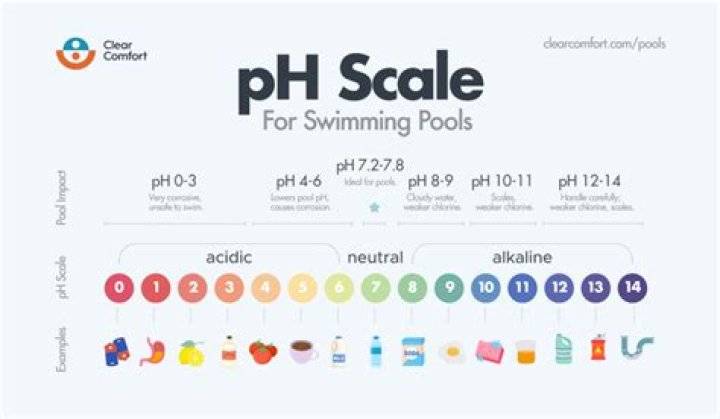
Baking soda, also known as sodium bicarbonate is naturally alkaline, with a pH of 8. When you add baking soda to your pool water, you will raise both the pH and the alkalinity, improving stability and clarity.
Can I use bleach and baking soda in my pool?
One alternative many pool owners use to purchasing pool chemicals, is to use household chemicals such as baking soda and Clorox bleach instead. Over-the-counter baking soda is actually completely identical to the alkalinity increaser sold at pool stores.
How do you raise pH but not alkalinity?
Use Aeration to Raise Pool pH (and not Alkalinity) You can’t, but you can raise pH without affecting Alkalinity. This is done by lowering the pH and Alkalinity with pH Decreaser, then raise the pH through aeration. Just add air!
Will baking soda bring down pH in pool?
Depending on what PH you wish to achieve, adding a little baking soda will simply not affect the PH level of your pool, thereby causing it to remain almost the same way (acidic). However, adding too much baking soda might also raise the PH level of your pool to an undesired stage (alkaline).
How to raise the pool alkalinity with baking soda?
If you need to lower your pool’s pH, you do so by adding an acid — typically muriatic acid or sodium bisulphate. When you need to raise the pH, you can add baking soda, but only if the total alkalinity of the water is also low. If the alkalinity is in the proper range or high, you should use soda ash to raise pH.
When to use hydrogen peroxide instead of chlorine?
In the modern world, hydrogen peroxide is commonly used as a bleaching agent for paper or in detergents or as a disinfectant effective against a wide range of viruses and bacteria. When compared with chlorine-based bleaches, hydrogen peroxide is considered a more environmentally friendly choice.
What should the pH be in baking soda?
Baking soda isn’t always the best chemical to use. When the pH is low, the total alkalinity is usually also low, but in rare cases, the alkalinity may be in the proper range — between 80 and 120 parts per million — while the pH is below 7.2. In such cases, it’s better to use soda ash (sodium carbonate) to raise the pH.
Which is better for pool care baking soda or borax?
Using Borax is much safer and easier. You can find this brand in your local store in the Laundry aisle. You need to note however that the Alkalinity level effects the amount of Borax needed more so than if you use Baking Soda or Soda Ash. Use this website to correctly calculate the amount of Borax to use:
What can I use instead of baking soda in my Pool?
Alternatives to Baking Soda for Raising pH Levels Some people recommend using baking soda (sodium bicarbonate) to adjust both pH and total alkalinity levels. However, sometimes you may have a pool with the proper alkalinity levels, but a low pH. In that case, it’s more effective to use soda ash (sodium carbonate).
What should your chlorine stabilizer be in water?
You’ll still need to monitor your available chlorine levels with your chlorine stabilizer at 50 ppm or lower; you can do this with consistent water testing. A good rule of thumb is to keep your sanitizer levels at round 7.5 percent of your stabilizer.
How much sodium hypochlorite is in Clorox bleach?
A typical bottle of Clorox bleach is 121 ounces of 8.3 percent sodium hypochlorite. Adding about 1-3 ppm for my 25,000-gallon pool costs about $1.20-$3.60 per day.
What’s the pH of baking soda in water?
Baking soda has a pH of 8.3, and the bicarbonate ions in baking soda act as a pH buffer. They have a negatively charged end, and a positively charged end. When either positive or negative ions attach to these ends, they form a compound that becomes solid and settles out of the water.